
For family-owned businesses, leadership transitions can bring excitement about the future—but they can also create uncertainty. When the path forward isn't clear, it can be tempting to pause major decisions, delay investments, or stick with what has always worked.
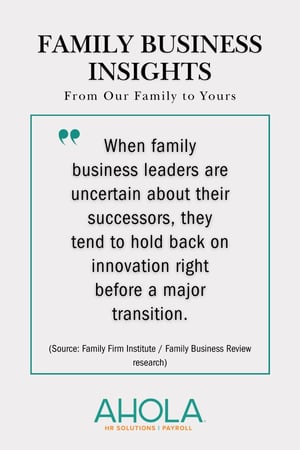
For a family business, that hesitation can have a ripple effect. Growth doesn't stop simply because leadership is changing. Employees still need direction, clients still need support, and the business still needs to adapt.
Confidence Creates Momentum
Succession planning is about more than identifying who will eventually lead the company. It's about creating confidence in what comes next.
When roles, responsibilities, and expectations are clear, family leaders can make decisions with greater confidence. The next generation can begin taking on meaningful responsibilities, while employees understand where the company is headed.
That clarity makes it easier to keep investing in people, technology, and new opportunities—even during transition.
Don't Let "We've Always Done It This Way" Become the Plan
Family businesses have something valuable that can't be replicated: history. But honoring that history doesn't mean every process needs to stay the same.
As businesses grow, payroll becomes more complex, HR regulations continue to evolve, and employees expect modern workplace practices. Updating HR policies, compensation structures, benefits, payroll processes, and compliance practices can give the next generation a stronger foundation to build on.
For small and mid-size family businesses, having the right HR and payroll structure in place can make a significant difference. It provides consistency today while preparing the business for tomorrow.
Keep Your People Part of the Transition
Leadership changes don't happen in a vacuum. Employees are part of the transition, too.
Long-tenured employees often hold valuable institutional knowledge, while newer employees bring fresh perspectives and skills. Keeping both groups informed and engaged can help maintain stability as leadership evolves.
Clear communication, consistent HR practices, and thoughtful workforce planning help employees understand that while leadership may change, the company's commitment to its people remains strong.
Growth Doesn't Have to Wait for Succession
At Ahola, we've experienced generational change while continuing to evolve as a business. What began in 1967 as a payroll company has grown into a provider of payroll, HR, compliance, and workforce solutions for small and mid-size businesses.
Family businesses don't have to choose between honoring their legacy and embracing what's next. With trust, planning, and the right foundation, they can do both.
Plan for the Transition. Prepare for Growth.
Succession planning shouldn't be something a family business addresses only when a transition is imminent. The earlier the conversation begins, the more opportunity there is to develop future leaders, strengthen operations, prepare employees, and identify where the business needs to evolve.
The goal isn't simply to pass the business from one generation to the next.
It's to make sure the next generation has the confidence, structure, and support to move it forward.
Reply a Comment